
Simple Rennet Cheese Recipe
Introduction
This simple rennet cheese recipe is a rewarding way to make fresh cheese at home using minimal ingredients. With just a few steps, you can create a soft, tangy cheese perfect for snacking or cooking.
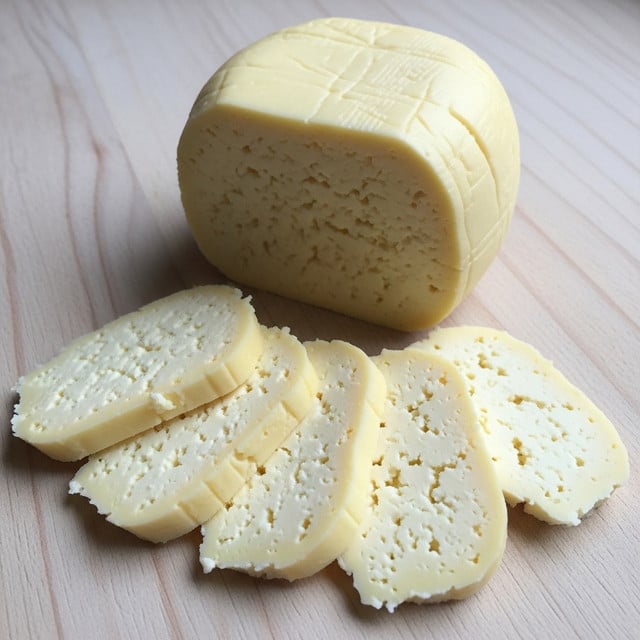
Ingredients
- 1/2 gallon whole milk, preferably organic (NOT ultra-pasteurized)
- 1/2 cup milk kefir or yogurt
- 2-5 drops liquid rennet
- 1 1/2 tablespoons kosher, pickling, or sea salt
Instructions
- Step 1: Combine the milk and kefir or yogurt in a medium sauce pot. Place the pot in a dehydrator and let it sit for 1-2 hours at 100°F. Alternatively, hold it over very low heat on the stove, removing it as needed to maintain the temperature with a thermometer.
- Step 2: Dilute the liquid rennet in 1/4 cup warm water.
- Step 3: Remove the pot from the dehydrator if using. Slowly add the diluted rennet while stirring continuously. Stop stirring once all rennet is added. Turn off the burner if still on and let the mixture sit undisturbed for 30 minutes to coagulate.
- Step 4: Place the pot back on low heat to gently rewarm the curd. Slice the curd into roughly 1-inch cubes with a knife and gently stir without breaking the curds too much. Maintain the heat at 100°F for 10 minutes for a soft cheese. For a firmer cheese, raise the temperature slowly to 110°F and warm for 30-60 minutes.
- Step 5: Line a colander with cheesecloth. Use a slotted spoon to transfer the curds into the cheesecloth, sprinkling salt between layers as you go.
- Step 6: Gather the corners of the cheesecloth, twist to form a ball, and squeeze out as much liquid as possible. Hang the cheeseball above a pot to catch whey for 24 hours.
- Step 7: After 24 hours, enjoy the cheese immediately or age it further by re-wrapping daily in dry cheesecloth and storing at room temperature. Once the cheesecloth is dry, wax for longer storage or refrigerate and enjoy.
Tips & Variations
- Use organic, non-ultra-pasteurized milk for best texture and flavor.
- Experiment with the amount of rennet to adjust setting time and firmness.
- For a tangier flavor, extend fermentation time with kefir or yogurt before adding rennet.
- Add herbs or spices between layers in the cheesecloth for flavored cheese.
Storage
Fresh cheese can be stored in the refrigerator wrapped in wax paper or plastic wrap for up to one week. To age the cheese, keep it wrapped in a dry cheesecloth at room temperature, re-wrapping daily until the cloth dries out completely. After aging, waxing the cheese helps preserve it longer. When ready to use, reheat gently to bring out flavor and softness.
How to Serve
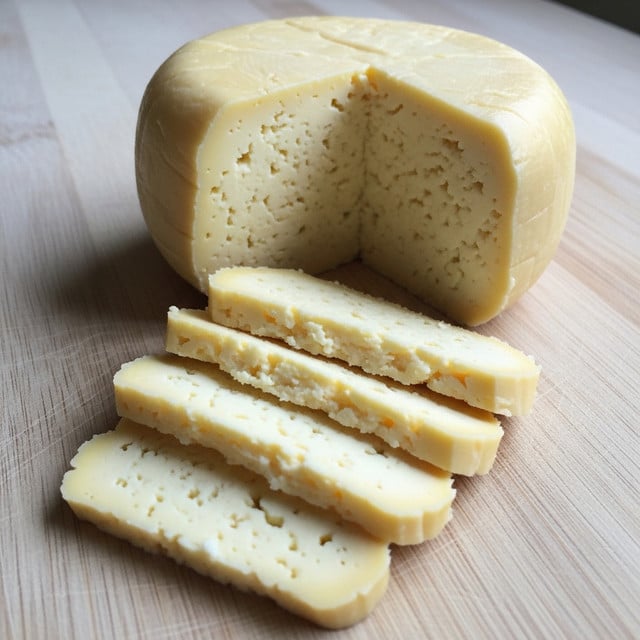
Serve this delicious recipe with your favorite sides.
FAQs
Can I use ultra-pasteurized milk for this recipe?
Ultra-pasteurized milk is not recommended as the heating process alters protein structures and prevents proper curd formation needed for this cheese.
How do I know when the milk has coagulated properly?
After adding rennet and letting the milk sit for 30 minutes, the milk should firm up and pull away from the sides of the pot, forming a custard-like mass that can be cut with a knife.
Print
Simple Rennet Cheese Recipe
- Total Time: 3 hrs 15 mins
- Yield: Approximately 1 pound of cheese 1x
- Diet: Vegetarian
Description
This Simple Rennet Cheese Recipe is a straightforward guide to making your own fresh cheese at home using whole milk, kefir or yogurt, liquid rennet, and salt. The process involves gentle warming, coagulating, cutting curds, and pressing the cheese to achieve a soft or firm texture. Perfect for home cheese-makers seeking a mild, creamy cheese with minimal ingredients and traditional techniques.
Ingredients
Milk Base
- 1/2 gallon whole milk, preferably organic (NOT ultra-pasteurized)
- 1/2 cup milk kefir or yogurt
Coagulation
- 2–5 drops liquid rennet
- 1/4 cup warm water (for diluting rennet)
Seasoning
- 1 1/2 Tbsp kosher, pickling, or sea salt
Instructions
- Combine Milk and Kefir or Yogurt: In a medium sauce pot, combine the whole milk and the milk kefir or yogurt. Place the pot inside a dehydrator set to 100°F and let it sit for 1-2 hours to gently culture. Alternatively, place the pot over a very low stove flame, maintaining the temperature carefully with a thermometer to keep it at about 100°F.
- Dilute Rennet: Mix 2-5 drops of liquid rennet into 1/4 cup of warm water, stirring gently until fully dissolved.
- Add Rennet to Milk Mixture: Remove the pot from the dehydrator or off the stove. Slowly pour the diluted rennet into the milk mixture while continuously stirring. Once all the rennet is added, stop stirring. Turn off any heat source and let the mixture sit undisturbed for 30 minutes to allow the milk to coagulate into curds.
- Cut and Gently Heat Curds: Place the pot back on low heat. If curds are not firm, gently rewarm them. Use a knife to slice the curd into roughly 1-inch cubes. Stir gently to separate curds without breaking them too much. Maintain a temperature around 100°F for about 10 minutes for soft cheese. For a firmer cheese, gradually raise temperature to 110°F and heat for an additional 30-60 minutes.
- Drain Curds with Salt: Line a colander with cheesecloth. Using a slotted spoon, carefully scoop the curds into the cheesecloth-lined colander. Layer the curds with salt evenly as you transfer them.
- Form and Press the Cheeseball: Gather the corners of the cheesecloth and twist together, then squeeze out excess liquid to form a cheese ball. Hang the cheesecloth bundle above an empty pot to collect whey and let it drain for 24 hours.
- Age or Enjoy Cheese: After draining for 24 hours, the cheese is ready to eat immediately. For further aging, re-wrap the cheese daily in fresh, dry cheesecloth and keep at room temperature. When the cheesecloth becomes completely dry, you can wax the cheese for extended storage or refrigerate and enjoy promptly.
Notes
- Use only whole milk that is not ultra-pasteurized to ensure proper coagulation.
- Maintaining the correct temperature (100-110°F) is critical for successful curd formation.
- Adjust the amount of rennet depending on milk freshness and ambient temperature.
- For a firmer cheese, extend heating times and increase temperature carefully.
- Hanging the cheese to drain removes excess whey and improves texture.
- Aging cheese requires careful daily wrapping and monitoring to avoid mold formation.
- Waxing cheese after drying extends shelf life and prevents spoilage.
- Prep Time: 2 hrs 15 mins
- Cook Time: 1 hr
- Category: Cheese Making
- Method: Stovetop
- Cuisine: American
Keywords: rennet cheese, homemade cheese, simple cheese recipe, cheese making at home, fresh cheese, cultured cheese